


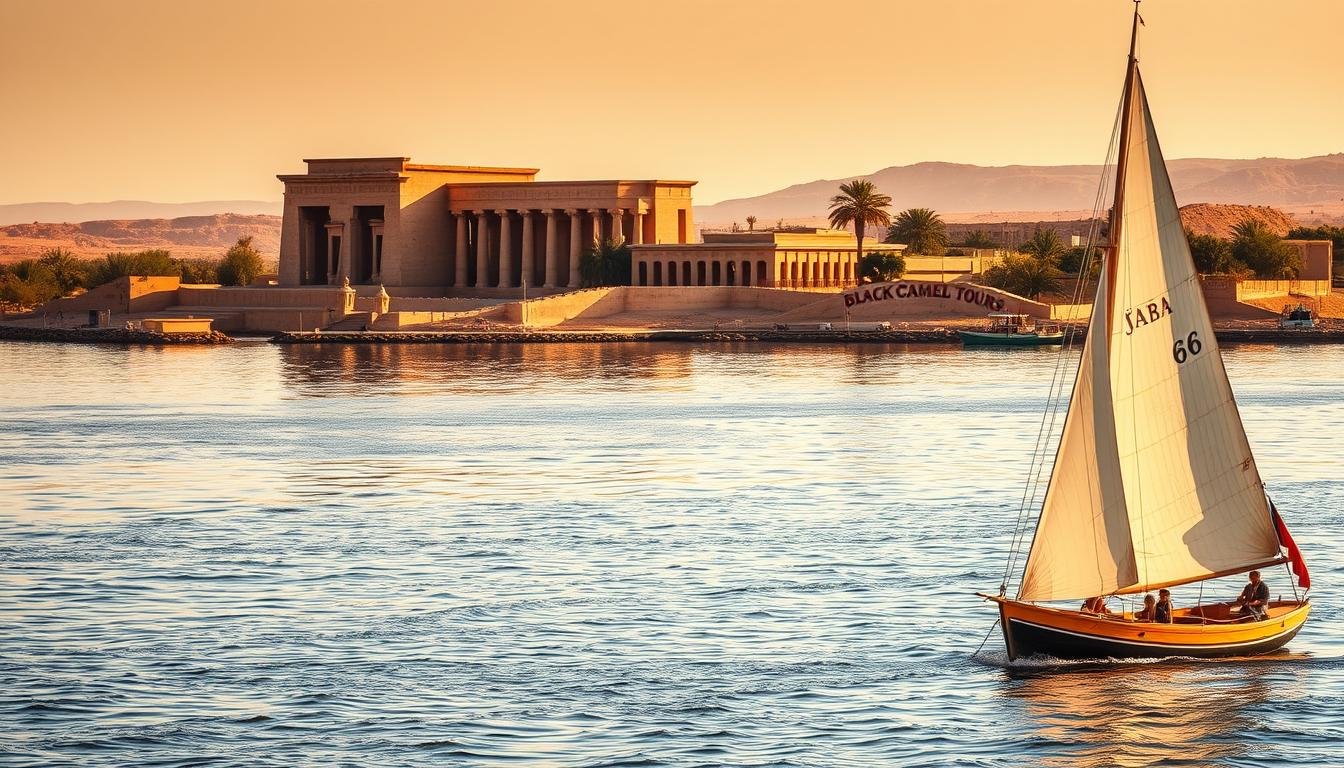
Could one river town rewrite everything you thought about travel in the Nile Valley? Step onto a sunlit corniche and you feel it: a slower rhythm, island-dotted views, and a calm that made visitors say this city breathes differently than larger hubs.
Set along the Nile in Upper Egypt, the town grew as a world center for trade, granite quarries, and island temples. UNESCO efforts in the 1960s saved major monuments, reshaping the travel story here and preserving key pieces of history.
Expect river breezes, easy boat logistics, and walkable streets that invite slow strolls. Headline attractions like Philae, the Unfinished Obelisk, Elephantine, and day trips to Abu Simbel give a clear backbone to any itinerary.
Plan with Black Camel Tours for curated routes, tickets, and transfers that keep your trip smooth and calm. For questions or bookings: 📩 Booking@blackcameltours.com | 🌐 blackcameltours.com | 📞 +43 660 9081449 | +20 108 073 3101.
Key Takeaways
- The Nile setting and islands create a relaxed travel vibe.
- Historic quarries and temples make the town a cultural center.
- UNESCO relocations preserved major attractions for visitors.
- Easy access to Philae, Elephantine, and Abu Simbel shapes itineraries.
- Book with Black Camel Tours to save time and increase calm.
The Aswan Vibe: What Makes This Ancient City Feel So Peaceful
Daily life here moves with a calm rhythm: short walks, slow coffees, and bright Nubian murals that greet visitors along the Nile corniche.
The city stands in sharp contrast to larger cities. Streets are quieter, traffic lighter, and interactions rarely feel pushy. That relaxed tempo gives tourists space to explore without rush.
Warm people and living culture shape everyday scenes. Locals offer friendly directions, ferry tips, and fair prices when asked. Light haggling happens near busy spots, but it rarely spoils the mood.
The town’s frontier history and trading past shaped an open, tolerant vibe that lingers today. Distances are short, so walking or hopping between islands feels natural.
- Easygoing rhythm vs. fast-paced urban centers
- Colorful murals, warm greetings, helpful locals
- Time to stroll, sip coffee, or take a scenic ferry
- Pair a relaxed day with low-stress logistics from a trusted operator
Plan a calm day: message Black Camel Tours with your preferred time window—📩 Booking@blackcameltours.com | 🌐 blackcameltours.com | 📞 +43 660 9081449 | +20 108 073 3101—for custom transfers and ticketing.
Geography, Sun, and the Nile: How Nature Shapes Serenity in Aswan
Where the river opens and the land rises, movement slows and the day follows sunlight.
Located just south of the First Cataract, this place once marked a clear southern frontier. That natural bottleneck fostered a frontier trade spirit that layered cultures and kept life measured.
The nile river here stretches roughly 650 meters across, creating wide water views that calm both boat and foot traffic. Soft horizons invite felucca sails, island picnics, and long terrace rests.
Sun and dry air rule the calendar. Summers reach about 40°C and winters near 23°C, so early starts and golden-hour walks pay off. Plan shade, water, and a mid-day siesta to match the pace.
Granite outcrops and desert plateaus amplify quiet moments. Step onto a small island or riverside terrace and the surrounding rock makes the sounds feel distant.
Being in Upper Egypt links the city to short river trips to temples and nearby sites. For a full sense of place, prioritize riverside time—sails, sunsets, and slow crossings that show how nature sets the tone.
- Tip: Carry water, seek shade, and time outings for early morning or late afternoon.
Why Aswan Is Egypt’s Most Peaceful Ancient City
Daily life here moves slowly by design. The town’s compact grid means short walks and fewer cars. Small blocks and narrow lanes invite walking and ferries rather than long taxi rides.
Smaller scale and lighter traffic make a real difference. Ferries and feluccas set the pace, so streets feel quieter and noise drops at dusk. The corniche acts like a communal living room where people stroll, sip tea, and watch the Nile.
Friendly neighborhoods and relaxed rhythms
Nubian areas add color and warmth. Encounters with local people are often easy and welcoming—less pressure than in larger cities such as Cairo or Luxor. Visitors note more smiles and calm conversations in island lanes and village squares.
- Compact blocks, fewer vehicles, ferry-first movement.
- Evening corniche walks, tea stops, and slow sunsets.
- Warm interactions in Nubian neighborhoods versus busier urban centers.
- Plan mornings and late afternoons to avoid midday heat; popular spots stay gentle today when timed right.
Practical tip: Choose lodging near the water to wake to calm views and easy boat access. Build rest pockets into each day—museums mid-morning and a felucca at dusk—to keep the feel unhurried and pleasant for all visitors.
Nubian Culture Up Close: Villages, Color, Music, and Daily Life
A thirty-minute crossing reveals a riverside neighborhood where daily life plays out in bright paint and shared tea.
Gharb Seheyl Village sits across the river and is reached by boat in about 30 minutes each way. Colorful murals and steady drumbeats welcome visitors. Hosts often invite guests into a home for tea, music, and dancing that turns a short visit into a warm exchange.
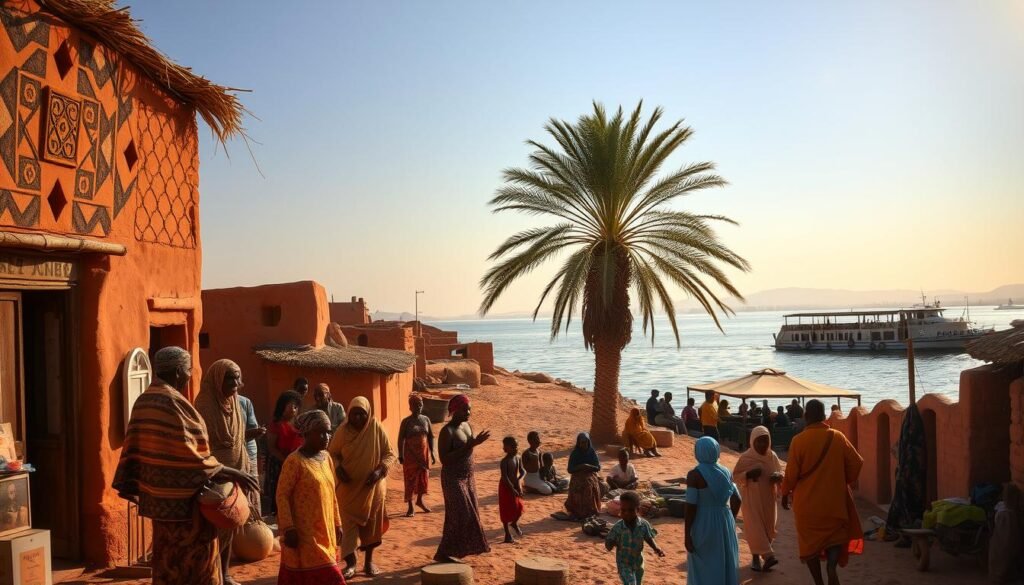
Craft traditions
Local craftwork shows a long line of skill. You’ll find palm baskets, bright textiles, hand-thrown pottery, and wood carvings with geometric patterns shaped over years.
Many items are sold directly by makers, supporting fair trade and giving tourists a chance to take part in a meaningful purchase.
Symbols and stories
Look for crocodile motifs on doorways and murals. In local belief, the crocodile acts as a protector and sometimes appears as a cherished pet.
- Boat logistics: plan a guided short trip to combine transport and respectful host introductions.
- Practical tips: go later in the afternoon for cooler light, wear breathable clothes, and bring small cash for crafts.
- Vibe: lively and friendly—performances invite participation but come with no pressure to buy.
Book respectful visits and trusted guides through Black Camel Tours to arrange fair rates and local hosts: 📩 Booking@blackcameltours.com | 🌐 blackcameltours.com | 📞 +43 660 9081449 | +20 108 073 3101.
Sacred Isles of Calm: Elephantine Island and Kitchener’s (Botanical) Island
A brief boat trip brings you to islands where gardens, guesthouses, and ruins set a gentle pace.
Elephantine Island: guesthouses, ruins, and quiet Nile views
Walk village lanes where Nubian families live and small archaeological sites sit near the southern shore.
Guesthouses and the Mövenpick Resort offer terraces, pools, and some of the city’s best Nile views. Wandering these lanes feels like stepping into a lived-in neighborhood.
Bring a book, an easy camera, and time to pause on a riverside bench.
Kitchener’s Island: shaded botanical paths and birdlife
Kitchener’s Island is a botanical haven with shaded walks, tall palms, and steady birdsong. It works well as a short, cooling stop during a longer boat journey.
Many visitors group both isles into one relaxed outing. Simple, short tours handle boat timing and entry details so you can move without rush.
- Slow down on Elephantine Island for village paths, ruins, and calm panoramas.
- Stay at guesthouses or the Mövenpick for terraces and quiet pools.
- Use Kitchener’s Island as a botanical break on a wider river tour.
- Combine both isles in one gentle trip to feel how island life shapes the day’s rhythm.
Philae Temple: A Tranquil Journey Through Ancient Egypt and the Isis Cult
A short boat ride through quiet channels reveals carved pylons that rise like a storybook from glassy water.
The philae temple was rescued in a UNESCO-led relocation in the 1960s and rebuilt on Agilkia Island after the aswan high dam raised local water levels. That massive project blends archaeology and modern engineering, and the construction story adds a modern layer to the site’s deep past.
What to expect on the approach: calm Nile River channels, passing granite islets, then the entrance pylons framed against late light. Arrive near sunset for the best photos and mirror-like reflections.
Highlights for visitors
- Graceful colonnades and sanctuary rooms that illustrate the cult of Isis and local history.
- Evening Sound & Light Show—myths narrated under floodlit reliefs.
- Consider a guided visit for smooth boats, ticketing, and richer stories.
“The move to Agilkia stands as one of the 20th century’s great heritage rescues.”
Timing tip: buy tickets early or include the site in a guided itinerary to avoid waits and to understand both the ancient rites and the modern relocation journey.
Aswan Icons and Day Trips: Unfinished Obelisk, Aswan High Dam, and Abu Simbel
A trio of iconic sites gives a clear snapshot of local craft, modern engineering, and royal spectacle.
Granite quarries and the craft behind the Unfinished Obelisk
The unfinished obelisk sits in a quarry where chisel marks and trenches show ancient stonemasonry and construction methods.
Stand close and you can read the tool marks that prove how artisans worked directly from the bedrock.
Dam viewpoints and the panorama of Lake Nasser
Visit the aswan high dam for sweeping views over lake nasser and to understand modern water control across the country.
The high dam reshaped flood cycles, farming, and local life—stop at a viewpoint for photos and context.
Abu Simbel day trip: sun festivals and colossal façades
A classic day trip leaves early for dramatic arrival at abu simbel.
Walk the monumental façades carved for Ramses II, then explore interior reliefs.
Plan visits around the biannual sun festivals on Feb 22 and Oct 22 for a memorable light event.
- Start at the quarry to see hands-on evidence of ancient work.
- Add a quick dam stop for panoramic photos of the lake.
- Reserve an early Abu Simbel trip for the best light and fewer crowds.
| Site | Highlight | Best Time | Notes |
|---|---|---|---|
| Unfinished Obelisk | Quarry marks, scale of attempted obelisk | Morning | Pairs well with the Nubian Museum |
| Aswan High Dam / Lake Nasser | Panoramic reservoir views, modern engineering | Late afternoon | Short viewpoint stop fits tight schedules |
| Abu Simbel | Colossal façades, interior reliefs, sun festivals | Early morning (day trip) | Allow full day; guided trips ease permits and transit |
“A compact route links quarry craft, dam engineering, and temple drama into one clear regional story.”
Book coordinated trips and permits with Black Camel Tours to combine these sites over one or two days.
📩 Booking@blackcameltours.com | 🌐 blackcameltours.com | 📞 +43 660 9081449 | +20 108 073 3101
The Nubian Museum: Storytelling the Region’s Ancient Roots
A single stop here ties stone, model, and oral memory into a timeline that makes temple visits richer.
The Nubian Museum presents artifacts that trace local life from prehistory through modern times. Chronological galleries link prehistoric finds to links with ancient egypt, then continue through Coptic, Islamic, and modern Nubian life today.
Chronological exhibits and models that contextualize your visits
Displays include detailed models of Abu Simbel and regional temples. These models clarify what you will see at outdoor sites and how relocations preserved heritage during dam construction.
The museum highlights trade routes, local construction methods, and everyday tools so visitors meet the past as people, not just monuments.
- Start or end a sightseeing loop here to frame your temple and island visits.
- Outdoor gardens echo Nubian building styles and invite a slow, reflective stop.
- Pair a museum visit with the nearby Unfinished Obelisk for hands-on context about stonemasonry.
- Curated tours turn a quick stop into a powerful center of understanding for the whole trip.
| Feature | What you learn | Best timing |
|---|---|---|
| Chronological galleries | Regional history from prehistory to modern life | Morning or late afternoon |
| Models & reconstructions | Visual context for key sites and relocations | Before visiting temples |
| Gardens & architecture | Nubian building styles and outdoor displays | Cooler hours for a relaxed walk |
“A visit here makes the stones speak—history becomes human.”
Peaceful Ways to Explore: Felucca Sailing, Island-Hopping, and Market Wanders
A short felucca ride can turn a simple afternoon into a serene mini-journey. Sunset sails are a bucket-list moment: breezes pick up, the nile river gleams, and views near elephantine island glow gold.
Sunset felucca rides on the Nile
Choose a late-afternoon felucca for calm winds and soft light. These slow sails suit anyone who prefers a gentle rhythm over hurried sightseeing.
Boat logistics to islands and villages
For longer hops or tight schedules, pick a motorboat. Motorboats help when you need timed connections to kitchener island or the philae temple pier.
Pro tip: book official tour packages to lock fair prices and smooth timing. Tours cut down on bargaining and save time for a relaxed experience.
Sharia as-Souq: gentle market browsing and local flavors
Stroll Sharia as-Souq for breads, spices, and colorful Nubian baskets with low pressure. Light bargaining works; buying small handcrafted items supports local makers directly.
- Recommend sunset felucca for a quiet journey near elephantine island.
- Use motorboats for longer island hops or timed connections.
- Sample loop: late felucca, short stop at kitchener island gardens, dockside dinner back in town for the day’s close.
- Book official tours to avoid haggling and ensure vetted captains for tourists.
“Bundle boats, a vetted felucca captain, and market drop-offs into one smooth plan.”
Ask Black Camel Tours to arrange a tailored tour: 📩 Booking@blackcameltours.com | 🌐 blackcameltours.com | 📞 +43 660 9081449 | +20 108 073 3101.
Where to Stay in Aswan: From Legendary Elegance to Nubian Guesthouses
From century-old grandeur to painted rooftops, lodging sets the tone for how you spend your days.
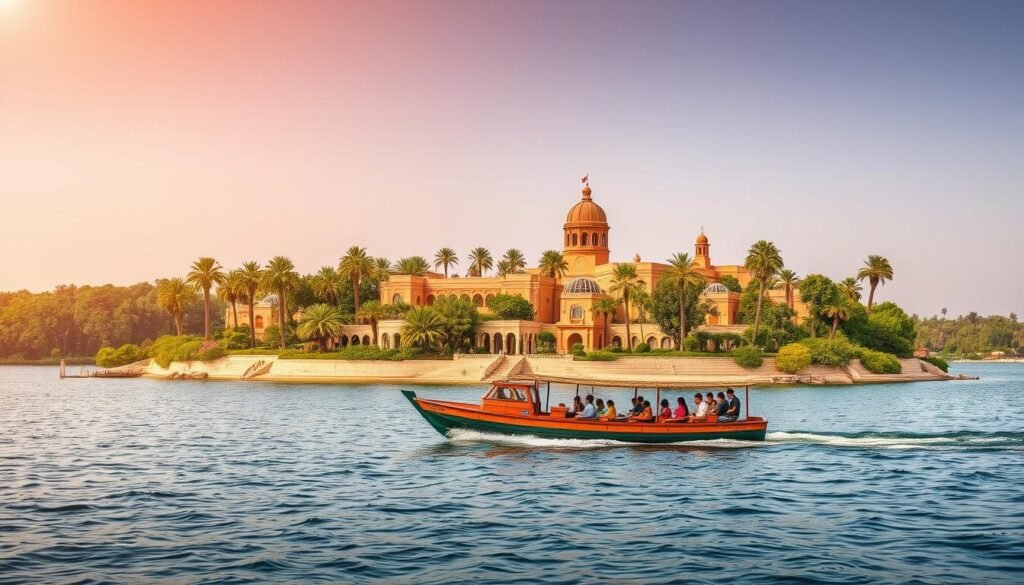
Sofitel Legend Old Cataract — a classic Nile-view retreat
The Sofitel Legend Old Cataract sits near the corniche and the Nubian Museum. This world-famous hotel blends refined dining, spa time, and private pools.
Visitors often book sunset rooms for sweeping river outlooks and a historic vibe that reflects years of hospitality heritage.
Mövenpick Resort on Elephantine Island — pools and panoramas
Set on Elephantine Island, the Mövenpick offers high terraces, gardens, and quiet water views.
Its island location makes this place restorative—ideal when you want easy boat access and poolside calm.
Nubian guesthouses — colorful terraces and authentic meals
Choose a small guesthouse for a true home feel today: bright murals, rooftop breakfasts, and hosts who share local tips freely.
These stays suit travelers who want neighborly warmth and simple, authentic dining.
- Pick by vibe: resort polish, island seclusion, or neighborhood color.
- Ask Black Camel Tours to secure sunset terraces and arrange boat shuttles.
- Match lodging to your travel pace so rest enhances exploration, not competes with it.
“Some properties show classic design and modern comfort layered over many years of welcoming guests.”
Book with: 📩 Booking@blackcameltours.com | 🌐 blackcameltours.com | 📞 +43 660 9081449 | +20 108 073 3101
Best Time to Visit, What to Wear, and a Calm Three-Day Plan
Timing your trip for milder months helps you enjoy temples and island gardens without heat fatigue.
Comfortable months and sensible clothing
October through April offers the most comfortable daytime walks and boat rides. Bring a hat, sunscreen, and light layers to handle strong sun and cool mornings.
Choose modest attire for village visits and religious sites. Breathable fabrics make moving between sites easier and show cultural respect.
Calm three-day sample plan
Day 1: Morning visit to Philae Temple, midday stop at the Nubian Museum, and a late felucca cruise on the nile river.
Day 2: Island-hopping—stroll Elephantine, enjoy a short botanical walk on Kitchener Island, then café time along the corniche.
Day 3: Early viewpoint at the aswan high dam for lake nasser panoramas, then choose an abu simbel day trip or a cultural visit to Gharb Seheyl village.
- Book a guided tour to secure timed entries, boats, and transfers.
- Let a trusted operator tailor the order of days to match your energy and interests.
| When | What to pack | Best day plan |
|---|---|---|
| Oct–Apr | Hat, sunscreen, light layers, modest clothes | Philae, Nubian Museum, felucca |
| Year-round (early starts) | Water bottle, breathable shirt, comfortable shoes | Island-hopping and Kitchener Island |
| Optional day | Camera, permit (if needed), snacks | Aswan High Dam viewpoint or Abu Simbel trip |
“Book a tour-first approach to lock in boats, tickets, and a calm pace.”
Ready to plan? 📩 Booking@blackcameltours.com | 🌐 blackcameltours.com | 📞 +43 660 9081449 | +20 108 073 3101
Plan Your Peaceful Aswan Day Trip with Black Camel Tours
Pick a curated itinerary that folds calm moments into every stop, from museum halls to sunset sails.
📩 Booking@blackcameltours.com | 🌐 blackcameltours.com
📞 +43 660 9081449 | +20 108 073 3101
Curated tours: Philae Temple, Nubian Museum, felucca sunset, and Abu Simbel
We bundle timing, boats, and tickets so visitors avoid lines and late transfers. Pick a classic plan or customize a private journey that matches your pace.
- Classic day: guided walk at philae temple, then a relaxed felucca at sunset.
- Signature trip: early Abu Simbel departures with reserved entries and rest stops.
- Culture & craft: nubian museum paired with the Unfinished Obelisk for a half-day of context and craft.
- Panorama stop: add an aswan high dam viewpoint to see lake nasser from the center of the reservoir.
- Stress-free bundles: boats, guides, and transfers arranged so your city visit feels effortless.
- Custom timing: contact us to shift start times, add meals, or reserve slow pauses.
| Package | Highlights | Best time | Notes |
|---|---|---|---|
| Philae + Felucca | Guided temple walk, sunset sail | Late afternoon | Ideal for relaxed photo light |
| Abu Simbel Day | Colossal façades, early entry | Early morning | Full-day logistics handled |
| Museum & Quarry | Nubian Museum, Unfinished Obelisk | Morning or midday | Good half-day cultural option |
“Book direct to secure boats, guides, and a calm rhythm for every stop.”
Conclusion
Granite quarries, island gardens, and rescued monuments form a compact, walkable heritage loop.
Here, ancient egyptian temples sit beside lively markets and quiet riverside neighborhoods. The Unfinished Obelisk shows craft and trade, while the aswan high dam and Lake Nasser reveal modern construction that reshaped the region for years.
Abu Simbel and other temple façades offer grand moments; small islands and village streets keep visits human in scale. That balance lets tourists meet history and living culture without hurry.
Plan a calm route—let the Nile River rhythm set your pace and book a guided day with Black Camel Tours: 📩 Booking@blackcameltours.com | 🌐 blackcameltours.com | 📞 +43 660 9081449 | +20 108 073 3101.